<!-- .slide: class="title" data-theme="dark" --> # The arts organization of 2036 ## What can AI do for us? **Andrew Shuttleworth**, Made Media, TLCC Australia, October 2026 Note: (No notes. Let the room settle.) --- <!-- .slide: class="cols poll" --> ## Where do you sit? AI… ### 1 …won’t really affect my organization. ### 2 <!-- .element: class="fragment" --> …is a real shift, like social media or search engines. ### 3 <!-- .element: class="fragment" --> …changes everything, like steam power or electricity. Note: Hi! I’d like to begin by acknowledging the Gadigal people of the Eora Nation, the Traditional Custodians of the land on which we gather today. I pay my respects to their Elders past and present. We’re here to talk about AI. Now, before I say anything about AI, I want to get a quick show of hands. Pick the option on the screen that’s closest to how you actually feel about AI. Not how you think you’re supposed to feel. Let me give you the options and then you can answer. One: it won’t really affect you or your organization. In five years you’ll be doing roughly what you do now. (Click.) Two: it’s a real shift, like social media or search engines, and we’ll absorb it the way we absorbed those. (Click.) Three: it changes everything, the way steam power or electricity did. It ends up underneath everything else. Who’s in camp one? Two? Three? (Take the hands. Say what you see.) Thank you. I’m in camp three. And I’ll come back to what “like electricity” means to me before I finish. --- <!-- .slide: class="statement" data-logo --> ## I’m Andrew Shuttleworth, from Made Media We design, build and look after Tessitura-integrated websites in the UK, the US, Canada and Australia. <p class="foot"><a href="https://made.media/hello">made.media/hello</a></p> Note: But first, a quick word on who I am, so you know whose opinion you’re getting. I’m Andrew Shuttleworth, from Made Media. We’re a digital agency that works with arts organizations and cultural institutions, particularly ones that sell tickets, and we’ve designed and built and maintain lots of Tessitura-integrated websites in the UK, the US, Canada, and here in Australia. Most of our clients for the past twenty years or so have used Tessitura. --- <!-- .slide: data-background-image="/_astro/lincoln-center.1KrfIpZY.jpg" data-background-size="cover" data-background-position="center bottom" data-background-color="#8a93c4" --> Note: I’ve been with Made for coming up on twelve years now, and I was a client before that, when I was director of digital at Lincoln Center in New York, during the time Lincoln Center moved onto Tessitura. --- <!-- .slide: class="figure" --> <div class="client-logo-grid"> <span class="client-logo" role="img" aria-label="Lincoln Center" style="--logo-src: url(/_astro/lc.Bdy3tGoo.svg); --logo-scale: 0.95"></span> <span class="client-logo" role="img" aria-label="LA Phil" style="--logo-src: url(/_astro/lap.CHT2qCqJ.svg); --logo-scale: 0.8"></span> <span class="client-logo" role="img" aria-label="Boston Symphony Orchestra" style="--logo-src: url(/_astro/bso.j8Xk1I9J.svg); --logo-scale: 0.85"></span> <span class="client-logo" role="img" aria-label="New York Philharmonic" style="--logo-src: url(/_astro/nyp.D8hJRG6c.svg); --logo-scale: 0.85"></span> <span class="client-logo" role="img" aria-label="Sydney Symphony Orchestra" style="--logo-src: url(/_astro/sso.CJZvh3rS.svg); --logo-scale: 0.9"></span> <span class="client-logo" role="img" aria-label="Melbourne Theatre Company" style="--logo-src: url(/_astro/mtc.BtpQDHKH.svg); --logo-scale: 0.9"></span> <span class="client-logo" role="img" aria-label="Seattle Repertory Theatre" style="--logo-src: url(/_astro/srt._YntpJot.svg); --logo-scale: 0.7"></span> <span class="client-logo" role="img" aria-label="The Shed" style="--logo-src: url(/_astro/shd.DPMseJxe.svg); --logo-scale: 0.85"></span> <span class="client-logo" role="img" aria-label="Minnesota Orchestra" style="--logo-src: url(/_astro/moa.DInxOo8L.svg); --logo-scale: 0.75"></span> <span class="client-logo" role="img" aria-label="New York City Ballet" style="--logo-src: url(/_astro/nycb.BDAbihOO.svg); --logo-scale: 0.6"></span> <span class="client-logo" role="img" aria-label="Royal Albert Hall" style="--logo-src: url(/_astro/rah.BO3zBxto.svg); --logo-scale: 0.85"></span> <span class="client-logo" role="img" aria-label="Brooklyn Academy of Music" style="--logo-src: url(/_astro/bam.CRcrmrFn.svg); --logo-scale: 0.85"></span> </div> Note: We work with organizations like Lincoln Center, the LA Phil and the New York Philharmonic, and here in Australia with Sydney Symphony Orchestra and Melbourne Theatre Company. So my view is a practitioner’s view: it comes from building and running these systems every day. --- <!-- .slide: class="figure bleed" --> <div class="diagram"> <svg xmlns="http://www.w3.org/2000/svg" viewBox="0 0 1280 720" role="img" aria-label="Four nested circles, each bigger than the last: my own work, our team, our clients, the world"> <g stroke-width="3"> <g> <circle class="line" cx="186" cy="360" r="150"/> <text class="t-label" x="186" y="354" text-anchor="middle" style="font-size: 36px">My own</text> <text class="t-label" x="186" y="396" text-anchor="middle" style="font-size: 36px">work</text> </g> <g class="fragment"> <circle class="line" cx="356" cy="360" r="320"/> <text class="t-label" x="506" y="346" text-anchor="middle" style="font-size: 36px">Our team</text> <text class="t-body" x="506" y="388" text-anchor="middle" style="font-size: 26px">Code, support</text> <text class="t-body" x="506" y="422" text-anchor="middle" style="font-size: 26px">and testing</text> </g> <g class="fragment"> <circle class="line" cx="506" cy="360" r="470"/> <text class="t-label" x="826" y="346" text-anchor="middle" style="font-size: 36px">Our clients</text> <text class="t-body" x="826" y="388" text-anchor="middle" style="font-size: 26px">Discovery, buying</text> <text class="t-body" x="826" y="422" text-anchor="middle" style="font-size: 26px">and security</text> </g> <g class="fragment"> <circle class="line" cx="796" cy="360" r="760"/> <text class="t-label" x="1122" y="346" text-anchor="middle" style="font-size: 36px">The world</text> <text class="t-body" x="1122" y="388" text-anchor="middle" style="font-size: 26px">Jobs, the</text> <text class="t-body" x="1122" y="422" text-anchor="middle" style="font-size: 26px">environment, and</text> <text class="t-body" x="1122" y="456" text-anchor="middle" style="font-size: 26px">how we get along</text> </g> </g> </svg> </div> Note: I think about AI at a few different scales. There’s my own work, where it’s made some things so much better and easier. I can tell an agent now something like “keep an eye on such and such a support ticket and make sure that so and so gets back to the client by Tuesday, and let me know if I need to intervene”. I’m much less likely to lose track of something like that with help, and it makes a very real difference to my being able to do more with less stress. (Click.) The next scale is that of our team, where more and more of our code is written with AI, and where it raises some uncomfortable questions for a company like ours. Will you need a website in 2036? Who’ll build it, and who’ll look at it? I don’t know! (Click.) There’s the scale of our clients, who are trying to work out how people will find their events and buy tickets, and how to keep their systems safe while they do. (Click.) And there’s the world. I’m worried, like so many people, about what this is going to do to jobs, to the environment, and to how we get along with each other. So I’m not here to tell you AI is good. But it’s happening either way. I’ll leave governance, intellectual property and cybersecurity to other sessions. They matter a great deal, but today I want to talk about where the opportunities are. --- <!-- .slide: class="contents" data-theme="dark" --> Note: I’ll do that in four parts: why the arts should care, where we are now, what’s coming, and where to start. --- <!-- .slide: class="divider" data-theme="rose-dark" data-act --> ## Why the arts should care Note: So why should arts organizations, in particular, care about any of this? I think you have more at stake than most. --- <!-- .slide: class="statement" --> ## Ticket income almost never covers the cost of a season Donors and government funding fill the gap. Note: You all know what this looks like from the inside. Ticket income, for almost all our clients, never covers the cost of a season – for a lot of organisations, ticket income alone never comes close – and donors and government funding have to fill the gap. There’s a reason for that, and it was worked out by studying organizations like yours. In the mid-1960s two American economists, William Baumol and William Bowen, were asked to find out why performing arts organizations never seemed to have enough money. What they found goes like this. --- <!-- .slide: class="cols split" --> ### A car factory 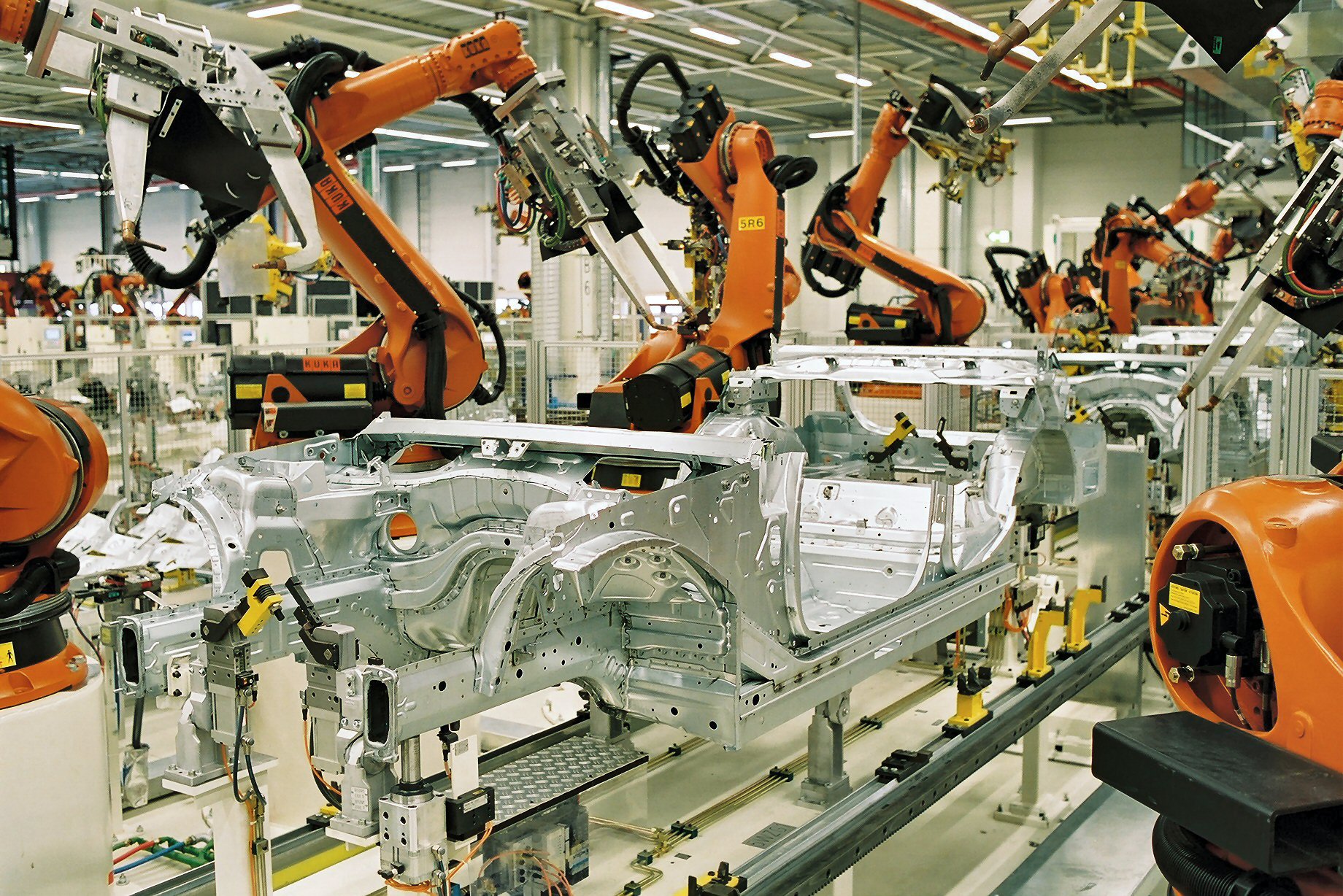 Far more cars per worker than fifty years ago <p class="source">BMW’s Leipzig plant, by BMW Werk Leipzig, CC BY-SA 2.0 DE, colours changed</p> ### An orchestra <!-- .element: class="fragment" --> 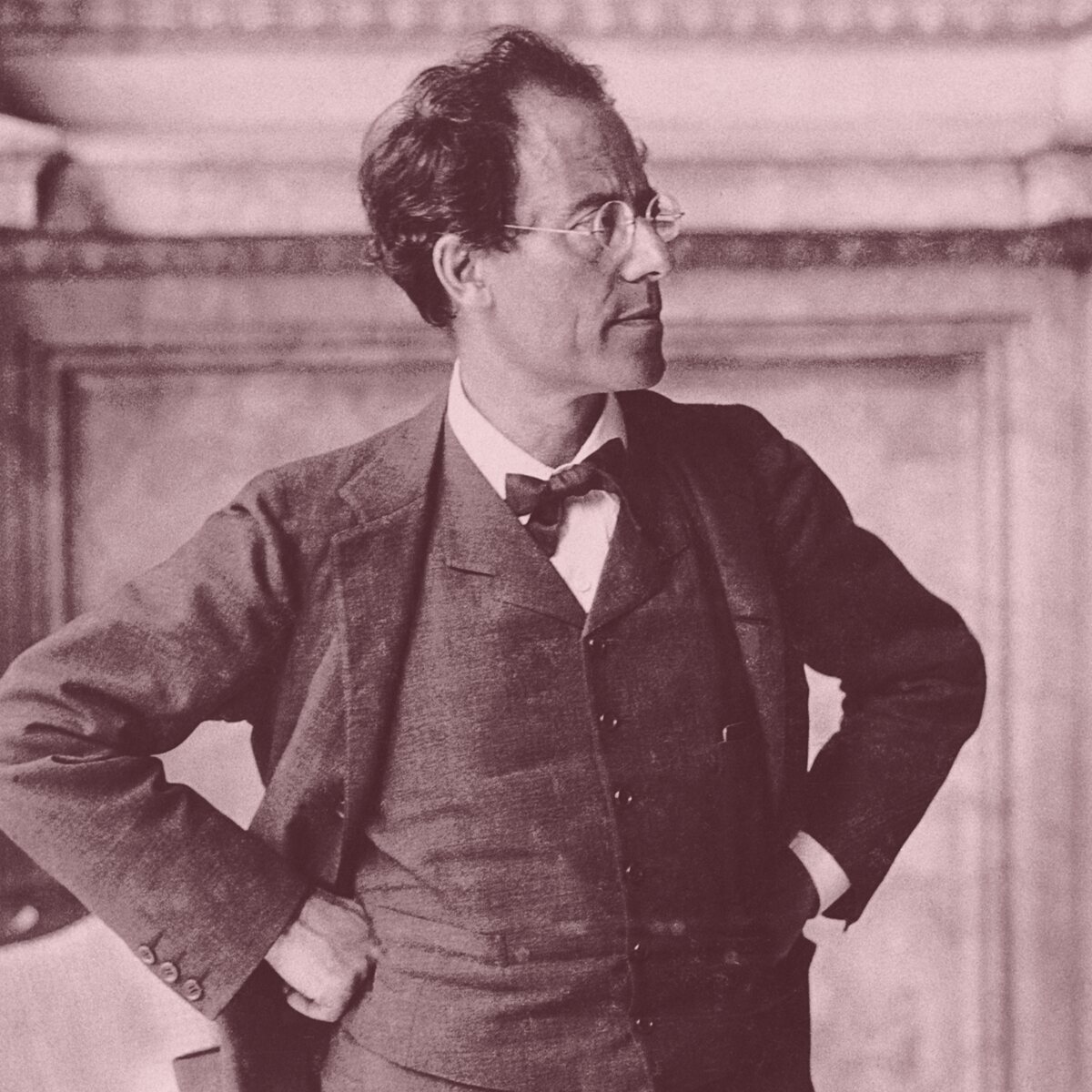 Mahler’s Fifth still takes seventy minutes and a full orchestra, as it did in 1904 <p class="source">Gustav Mahler at the Vienna Court Opera, 1907, by Moriz Nähr, colours changed</p> Note: In most of the economy, people get more productive over time. A car factory turns out far more cars per worker than it did fifty years ago, because the machines and the processes keep improving. So wages go up, and cars get cheaper in real terms at the same time. (Click.) A live performance – let’s take an orchestra – doesn’t get more productive. Mahler’s Fifth takes about seventy minutes and a full orchestra, just as it did in 1904. You can’t play it faster, or with half the players, and still have Mahler’s Fifth. I don’t like talking about art this way. Asking about the productivity of musicians, or the return on the investment of paying them, feels awful, and I hate that this is the world we live in. I’m not saying anything about what a performance of Mahler’s Fifth is worth. I’m looking at it through the lens the economy uses, because it’s the lens your finance director and your funders have to use too. --- <!-- .slide: class="figure" --> ## Baumol’s cost disease Musicians’ pay rises with everyone else’s, but they can’t play any faster <div class="diagram"> <svg xmlns="http://www.w3.org/2000/svg" viewBox="0 0 1152 480" preserveAspectRatio="xMinYMid meet" role="img" aria-label="Over time the cost of live performance rises compared with everything else, while the cost of cars and other manufactured goods falls"> <text class="t-body" x="0" y="22">Cost compared with everything else</text> <path class="line" stroke-width="2" d="M2,48 V420 H740"/> <text class="t-body" x="0" y="458">1960s</text> <text class="t-body" x="740" y="458" text-anchor="end">Today</text> <path class="line rose" stroke-width="7" stroke-linecap="round" d="M4,250 C280,244 500,170 736,64"/> <path class="line slate" stroke-width="7" stroke-linecap="round" d="M4,250 C280,268 500,316 736,352"/> <text class="t-label" x="776" y="74">Live performance</text> <text class="t-label" x="776" y="334">Cars and other</text> <text class="t-label" x="776" y="368">manufactured goods</text> </svg> </div> <p class="source">After William Baumol and William Bowen, <em>Performing Arts: The Economic Dilemma</em>, 1966. An illustration of their argument, not data.</p> Note: But you still have to pay the musicians more every year, because they live in the same economy as the auto workers, and they could go and do something else. So the cost of putting on a concert rises, year after year, compared with almost everything else, even though nobody’s doing anything wrong. That’s Baumol’s cost disease. It’s called a disease, but it’s really a side effect of almost everything other than the artistic performance getting cheaper. And they didn’t have a cure for it. In fact, they predicted the gap would be permanent, and would get worse over time. (Pause.) Sixty years later, that’s still the basic shape of the business. --- <!-- .slide: class="figure" --> ## AI could take some of the pressure off The orchestra won’t get any faster, but the work around it could <div class="diagram"> <svg xmlns="http://www.w3.org/2000/svg" viewBox="0 0 1152 480" preserveAspectRatio="xMinYMid meet" role="img" aria-label="The same chart, with a third line: with AI helping the work around the performance, the cost of live performance rises more slowly"> <text class="t-body" x="0" y="22">Cost compared with everything else</text> <path class="line" stroke-width="2" d="M2,48 V420 H740"/> <text class="t-body" x="0" y="458">1960s</text> <text class="t-body" x="740" y="458" text-anchor="end">Today</text> <path class="line rose" stroke-width="7" stroke-linecap="round" d="M4,250 C280,244 500,170 736,64"/> <path class="line slate" stroke-width="7" stroke-linecap="round" d="M4,250 C280,268 500,316 736,352"/> <text class="t-label" x="776" y="74">Live performance</text> <text class="t-label" x="776" y="334">Cars and other</text> <text class="t-label" x="776" y="368">manufactured goods</text> <path class="line spring" stroke-width="7" stroke-linecap="round" stroke-dasharray="3 16" d="M4,250 C280,246 520,214 736,166"/> <text class="t-label" x="776" y="160">With AI around</text> <text class="t-label" x="776" y="194">the performance</text> </svg> </div> <p class="source">An illustration of Baumol and Bowen’s argument, not data</p> Note: AI isn’t going to make Mahler’s Fifth more productive either. But the orchestra is only part of an arts organization. If AI makes the work around it even a little more productive, some of the pressure comes off. With margins as thin as they are in the arts, that would make a real difference. --- <!-- .slide: class="figure" --> ## But AI speeds everyone else up too Sit it out, and the gap gets wider <div class="diagram"> <svg xmlns="http://www.w3.org/2000/svg" viewBox="0 0 1152 480" preserveAspectRatio="xMinYMid meet" role="img" aria-label="The same chart, with a fourth line: with AI in the factory too, manufactured goods get cheaper faster, so the gap stays wide even with AI around the performance, and grows without it"> <text class="t-body" x="0" y="22">Cost compared with everything else</text> <path class="line" stroke-width="2" d="M2,48 V420 H740"/> <text class="t-body" x="0" y="458">1960s</text> <text class="t-body" x="740" y="458" text-anchor="end">Today</text> <path class="line rose" stroke-width="7" stroke-linecap="round" d="M4,250 C280,244 500,170 736,64"/> <path class="line slate" stroke-width="7" stroke-linecap="round" d="M4,250 C280,268 500,316 736,352"/> <text class="t-label" x="776" y="74">Live performance</text> <text class="t-label" x="776" y="334">Cars and other</text> <text class="t-label" x="776" y="368">manufactured goods</text> <path class="line spring" stroke-width="7" stroke-linecap="round" stroke-dasharray="3 16" d="M4,250 C280,246 520,214 736,166"/> <text class="t-label" x="776" y="160">With AI around</text> <text class="t-label" x="776" y="194">the performance</text> <path class="line slate" stroke-width="7" stroke-linecap="round" stroke-dasharray="3 16" d="M4,250 C280,276 500,356 736,408"/> <text class="t-label" x="776" y="418">With AI in the factory</text> </svg> </div> <p class="source">An illustration of Baumol and Bowen’s argument, not data</p> Note: But the catch is AI is going to make the rest of the economy more productive too. If arts organizations don’t change how they work, the gap gets even wider. If they do, they roughly hold their ground. So I don’t think we can ignore it. --- <!-- .slide: class="statement" data-theme="rose-dark" --> ## Everything around the performance is knowledge work Marketing, fundraising, the box office, finance, education and operations Note: The good news is that the work around the performance is exactly the kind these tools are already good at. Marketing, fundraising, the box office, finance, education and operations: that’s all knowledge work. That’s right where these tools are starting to get applied really effectively. (Short of time? Skip this paragraph.) And it’s a real share of the budget. At the average American orchestra, about seventy percent of the money is spent putting concerts on stage: the players, the crew and the hall. The other thirty percent or so is everything around the performance. (Source: League of American Orchestras, Orchestra Facts: 2006–2014. The figures are for 2014, when concert production was 69% of spending and artists’ pay alone was 46%.) Which raises the question: how are we doing so far? --- <!-- .slide: class="divider" data-theme="slate-dark" data-act --> ## Where we are now Note: I’ll start with what the tools can actually do today. --- <!-- .slide: class="cols" --> ## What the tools can credibly do today ### Writing and analysis Program notes, donor letters, board reports, grant applications, minutes ### Audience and marketing <!-- .element: class="fragment" --> A version of each message for each audience, written from your own copy ### Customer service <!-- .element: class="fragment" --> Assistants that can look things up in Tessitura and act on them Note: I’d put it into three groups. The first is writing and analysis. A well-prompted state-of-the-art model can write a first draft about as well as a competent junior colleague, for tens of dollars a month per person, and you get much more out of it once you give it context, like your house style and examples of what good looks like. (Short of time? Skip this paragraph.) As someone who writes for a living, I’d add that what it can’t do is decide what you mean. It can’t tell you what your season is about, or why this donor should care about this project. Someone in your organization still has to know that and care about it. But these tools can be a massive accelerant. (Click.) The second is audience and marketing. We’ve known for years that messages written for a particular audience do better than one message sent to everyone, and the reason most of us don’t do more of it is time. That constraint has mostly gone. You write the core message, and the tool produces the variants from your own copy and your own data, and translates them too. I don’t think segmentation strategies in the arts have caught up with that yet (maybe because marketing and technology still sit in separate departments). (Click.) The third is customer service. Some of you probably already have a chatbot on your website that can answer questions and maybe hand people on to a human. What’s changing is that these assistants are getting access to the systems behind them, like Tessitura, so they can _do what the patron asked_, whereas before they could only tell them how. --- <!-- .slide: class="media" data-background-color="#f8f8f8" --> <div class="video"><video data-autoplay muted playsinline poster="/_astro/ticket-assistant-poster.BA54IA0K.jpg" src="/_astro/ticket-assistant.l1-S0fIM.mp4"></video></div> Note: Just as a quick aside: here’s a prototype we’ve been building along those lines. It knows about your performances and can answer questions about them, but it can also look into Tessitura to see what’s available, what seats are free, and take the patron through checkout. (It runs for 53 seconds and doesn’t loop.) Hard to know what a ticketing website will look like in five or ten years. This is one of our guesses. --- <!-- .slide: class="stat" --> ## 95% of generative AI pilots had no measurable effect on the bottom line <p class="source">MIT NANDA, The GenAI Divide: State of AI in Business 2025</p> Note: And yet most organizations aren’t getting much out of any of this. In August last year, researchers at MIT looked at a few hundred generative AI pilot projects in business as a whole, not just the arts, and ninety-five percent of them had no measurable effect on the bottom line. It’s a small study and it’s had its critics, but it matches what I see. The problem usually wasn’t the technology. It was that organizations added AI to the way they already worked, and hoped. --- <!-- .slide: class="cols split" --> ### The tool room at National Cash Register, Dayton, Ohio, around 1904 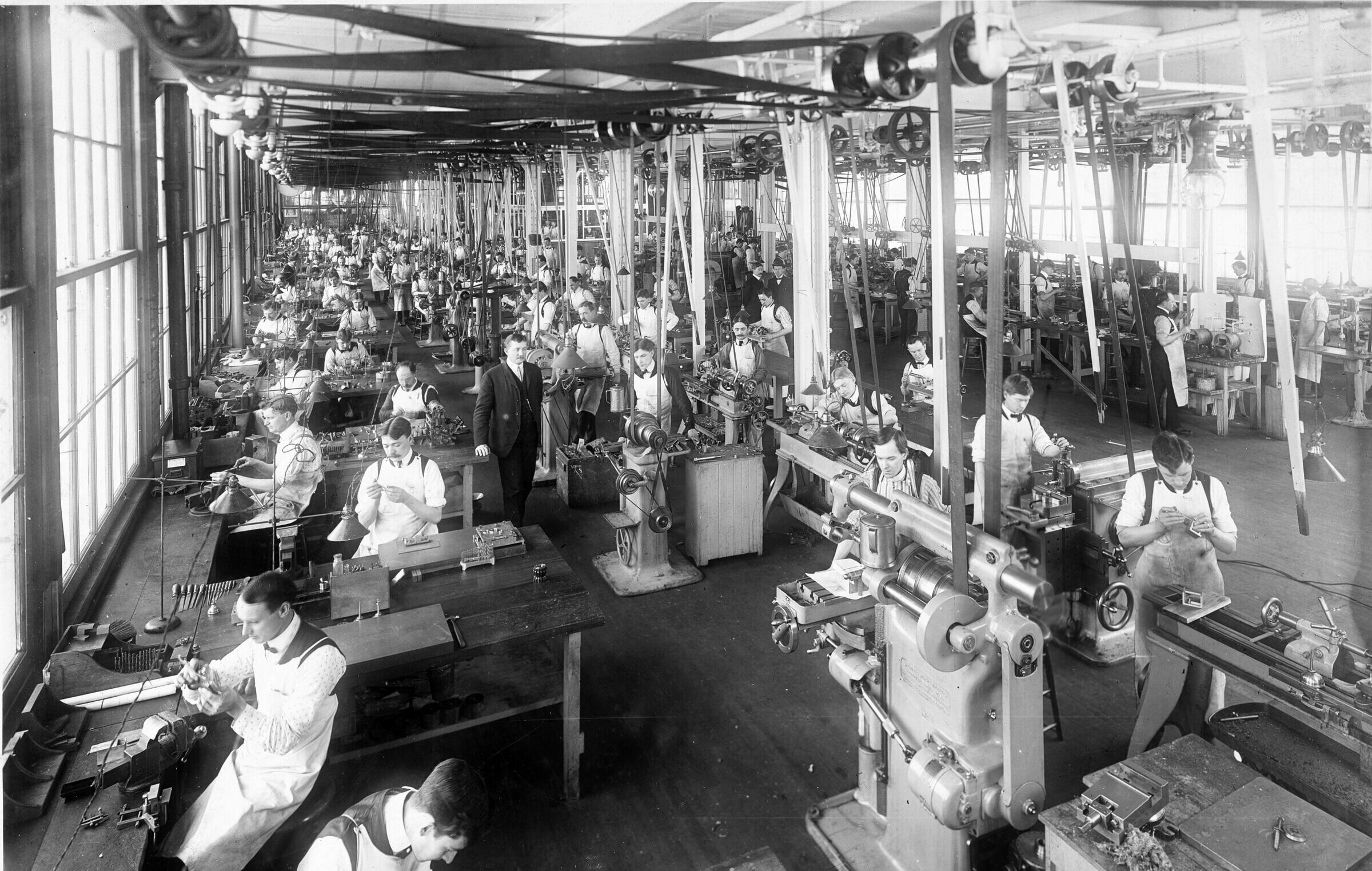 <!-- .element: style="object-position: center 1%" --> <p class="source">Geo. R. Lawrence Co., Library of Congress, LC-DIG-ds-02967</p> Note: This is where electricity comes in. In the 1880s, a factory would be built around one steam engine, which turned a long iron shaft running the length of the building, and every machine was driven by a leather belt from that shaft. This is a tool room in Dayton, Ohio, around 1904. Every one of those belts comes down from a shaft in the ceiling. --- <!-- .slide: class="figure" --> ## Built around the engine A factory in the 1880s <div class="diagram"> <svg xmlns="http://www.w3.org/2000/svg" viewBox="0 0 1104 470" preserveAspectRatio="xMinYMid meet" role="img" aria-label="A factory in the 1880s: one engine turns a long shaft across the ceiling, and every machine is driven by a belt from that shaft. The first electric factories swapped the steam engine for one big electric motor and kept everything else"> <path class="line" stroke-width="3" d="M2,460 V30 H1100 V460"/> <path class="line" stroke-width="3" d="M0,460 H1104"/> <path class="line" stroke-width="10" stroke-linecap="round" d="M150,96 H1060"/> <g stroke-width="2.5"> <circle class="ink" cx="340" cy="96" r="14"/> <circle class="ink" cx="520" cy="96" r="14"/> <circle class="ink" cx="700" cy="96" r="14"/> <circle class="ink" cx="880" cy="96" r="14"/> <circle class="ink" cx="1040" cy="96" r="14"/> <path class="line" d="M328,100 L304,352 M352,100 L376,352"/> <path class="line" d="M508,100 L484,352 M532,100 L556,352"/> <path class="line" d="M688,100 L664,352 M712,100 L736,352"/> <path class="line" d="M868,100 L844,352 M892,100 L916,352"/> <path class="line" d="M1028,100 L1004,352 M1052,100 L1076,352"/> </g> <g stroke-width="3"> <rect class="surface" x="280" y="352" width="120" height="108"/> <rect class="line" x="280" y="352" width="120" height="108"/> <rect class="surface" x="460" y="352" width="120" height="108"/> <rect class="line" x="460" y="352" width="120" height="108"/> <rect class="surface" x="640" y="352" width="120" height="108"/> <rect class="line" x="640" y="352" width="120" height="108"/> <rect class="surface" x="820" y="352" width="120" height="108"/> <rect class="line" x="820" y="352" width="120" height="108"/> <rect class="surface" x="990" y="352" width="100" height="108"/> <rect class="line" x="990" y="352" width="100" height="108"/> </g> <g class="fragment fade-out" data-fragment-index="1"> <circle class="paper" cx="130" cy="150" r="76"/> <g class="line" stroke-width="5"> <circle cx="130" cy="150" r="72"/> <circle cx="130" cy="150" r="58"/> <path stroke-width="6" d="M130,150 L130,92 M130,150 L180,121 M130,150 L180,179 M130,150 L130,208 M130,150 L80,179 M130,150 L80,121"/> </g> <circle class="ink" cx="130" cy="150" r="14"/> <text class="t-label" x="130" y="266" text-anchor="middle">Steam engine</text> </g> <g class="fragment" data-fragment-index="1"> <circle class="fill-electric" cx="130" cy="150" r="74"/> <circle class="line" stroke-width="4" cx="130" cy="150" r="74"/> <path class="ink" transform="translate(130 150) scale(3.6)" d="M3,-14 L-7,2 L-1,2 L-3,14 L7,-2 L1,-2 Z"/> <text class="t-label" x="130" y="266" text-anchor="middle">One big</text> <text class="t-label" x="130" y="300" text-anchor="middle">electric motor</text> </g> </svg> </div> Note: Here’s an “artistic rendering” of how that works. One engine, one shaft, a belt to every machine. (Click: the steam engine becomes an electric motor.) The first factories to go electric swapped the steam engine for one big electric motor, and kept the shaft, the belts and the building. And productivity barely moved. Maybe they were saving some money on coal. --- <!-- .slide: class="figure" --> ## Built around the work A factory in the 1920s <div class="diagram"> <svg xmlns="http://www.w3.org/2000/svg" viewBox="0 0 1104 470" preserveAspectRatio="xMinYMid meet" role="img" aria-label="A factory in the 1920s: one storey under a sawtooth roof, with a small electric motor on each machine and the machines in the order the work flows through them"> <defs> <marker id="unit-drive-arrow" viewBox="0 0 10 10" refX="8" refY="5" markerWidth="5" markerHeight="5" orient="auto-start-reverse"> <path class="ink" d="M0,0 L10,5 L0,10 z"/> </marker> </defs> <path class="surface" d="M2,150 L2,40 L220,150 L220,40 L440,150 L440,40 L660,150 L660,40 L880,150 L880,40 L1100,150 Z"/> <path class="line" stroke-width="3" stroke-linejoin="round" d="M2,460 V40 L220,150 V40 L440,150 V40 L660,150 V40 L880,150 V40 L1100,150 V460"/> <path class="line" stroke-width="3" d="M0,460 H1104"/> <g stroke-width="3"> <rect class="surface" x="60" y="352" width="140" height="108"/> <rect class="line" x="60" y="352" width="140" height="108"/> <rect class="surface" x="270" y="352" width="140" height="108"/> <rect class="line" x="270" y="352" width="140" height="108"/> <rect class="surface" x="480" y="352" width="140" height="108"/> <rect class="line" x="480" y="352" width="140" height="108"/> <rect class="surface" x="690" y="352" width="140" height="108"/> <rect class="line" x="690" y="352" width="140" height="108"/> <rect class="surface" x="900" y="352" width="140" height="108"/> <rect class="line" x="900" y="352" width="140" height="108"/> </g> <g> <circle class="fill-electric" cx="130" cy="318" r="28"/> <circle class="line" stroke-width="3" cx="130" cy="318" r="28"/> <path class="ink" transform="translate(130 318) scale(1.35)" d="M3,-14 L-7,2 L-1,2 L-3,14 L7,-2 L1,-2 Z"/> <circle class="fill-electric" cx="340" cy="318" r="28"/> <circle class="line" stroke-width="3" cx="340" cy="318" r="28"/> <path class="ink" transform="translate(340 318) scale(1.35)" d="M3,-14 L-7,2 L-1,2 L-3,14 L7,-2 L1,-2 Z"/> <circle class="fill-electric" cx="550" cy="318" r="28"/> <circle class="line" stroke-width="3" cx="550" cy="318" r="28"/> <path class="ink" transform="translate(550 318) scale(1.35)" d="M3,-14 L-7,2 L-1,2 L-3,14 L7,-2 L1,-2 Z"/> <circle class="fill-electric" cx="760" cy="318" r="28"/> <circle class="line" stroke-width="3" cx="760" cy="318" r="28"/> <path class="ink" transform="translate(760 318) scale(1.35)" d="M3,-14 L-7,2 L-1,2 L-3,14 L7,-2 L1,-2 Z"/> <circle class="fill-electric" cx="970" cy="318" r="28"/> <circle class="line" stroke-width="3" cx="970" cy="318" r="28"/> <path class="ink" transform="translate(970 318) scale(1.35)" d="M3,-14 L-7,2 L-1,2 L-3,14 L7,-2 L1,-2 Z"/> </g> <g stroke-width="3" marker-end="url(#unit-drive-arrow)"> <path class="line" d="M206,406 H262"/> <path class="line" d="M416,406 H472"/> <path class="line" d="M626,406 H682"/> <path class="line" d="M836,406 H892"/> </g> <text class="t-body" x="60" y="240">A small electric motor on each machine,</text> <text class="t-body" x="60" y="270">in the order the work flows</text> </svg> </div> Note: The gains came when people realized they could put a small motor on each machine. Then you could lay the factory out in the order the work flowed through it, on one floor, with better light, and when one machine broke down the rest kept running. --- <!-- .slide: class="cols split" --> ### A Ford plant in 1924, where the work comes to the machines 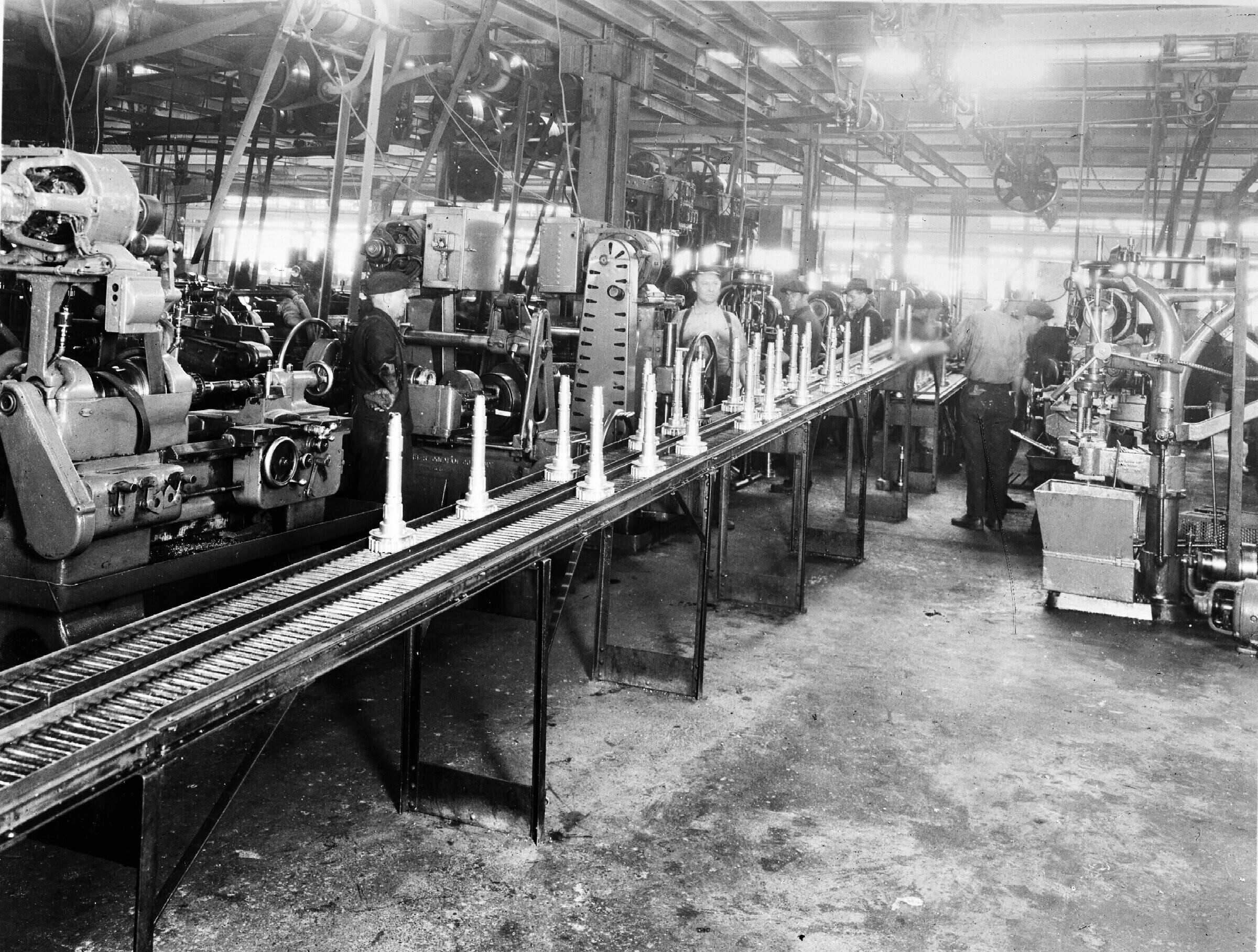 <p class="source">Detroit Publishing Co., Library of Congress, LC-DIG-det-4a27948</p> Note: That didn’t really happen until the 1920s, about forty years after the first electric motors went in. This is a Ford plant in 1924. The gains came from reorganizing the work around the new technology. That was slow, and it was mostly a management job, and I think the same is going to be true this time. Giving everyone a ChatGPT login and changing nothing else is the same as putting a big electric motor on the old shaft. I’d love to show you the arts organization that’s already done this, and I can’t. I don’t know of one yet. I watched one get close, with some very good decisions on the table, and then it all fell apart. So it’s early, and it’s hard. --- <!-- .slide: class="figure" --> ## You’ve been through this before <div class="diagram"> <svg xmlns="http://www.w3.org/2000/svg" viewBox="0 0 1104 470" preserveAspectRatio="xMinYMid meet" role="img" aria-label="Three systems, each with its own record of the same person, become one shared Tessitura record"> <defs> <marker id="tess-arrow" viewBox="0 0 10 10" refX="8" refY="5" markerWidth="5" markerHeight="5" orient="auto"> <path class="ink" d="M0,0 L10,5 L0,10 z"/> </marker> </defs> <g> <rect class="surface" x="0" y="10" width="440" height="130" rx="10"/> <text class="t-label" x="32" y="62">Box office system</text> <text class="t-body t-serif" x="32" y="104">Margaret Chen</text> <rect class="surface" x="0" y="170" width="440" height="130" rx="10"/> <text class="t-label" x="32" y="222">Fundraising database</text> <text class="t-body t-serif" x="32" y="264">Mrs M. Chen</text> <rect class="surface" x="0" y="330" width="440" height="130" rx="10"/> <text class="t-label" x="32" y="382">Marketing list</text> <text class="t-body t-serif" x="32" y="424">margaret.c@…</text> </g> <g class="fragment"> <g class="line" stroke-width="3" marker-end="url(#tess-arrow)"> <path d="M456,75 C560,75 560,210 640,226"/> <path d="M456,235 H640"/> <path d="M456,395 C560,395 560,260 640,244"/> </g> <rect class="line slate" stroke-width="5" x="664" y="150" width="440" height="170" rx="10"/> <text class="t-label" x="696" y="206">Tessitura</text> <text class="t-body t-serif" x="696" y="250">Margaret Chen</text> <text class="t-body" x="696" y="290">One record, shared by everyone</text> </g> </svg> </div> Note: It reminds me a little bit of moving to Tessitura, too. A lot of arts organizations had a box office system, a fundraising database and a marketing list, each with its own version of the same person. Here’s Margaret Chen, three times. (Click.) Tessitura gave everyone one shared record, and the organizations that got the most out of it were the ones that changed how their departments worked together, and not just where the data lived. The way most organizations are using AI right now is a bit like going back to everyone having their own database. Everyone has their own tool, their own ways of using the thing, and their own version of the truth. Two people who disagree about what a report shows can each get an AI to agree with them. You all probably know how some organizations are _really good_ at using Tessitura and getting the most out of it, and what a difference that can make. I think organizations ought to be getting really good at AI the same way, and that starts with it being someone’s job. --- <!-- .slide: class="stat" --> ## 79% of arts organizations have no internal lead on AI <p class="source">Capacity, The State of AI & the Arts 2026</p> <div class="corner"><img src="/_astro/capacity-state-of-ai-2026.RwiqN35F.png" alt="Cover of The State of AI and the Arts 2026, from Capacity"><img src="/_astro/capacity-report-qr.C7u2msMB.png" alt="QR code linking to the report"></div> <p class="foot"><a href="https://capacityinteractive.com/resources/the-state-of-ai-the-arts-2026/">capacityinteractive.com/resources/the-state-of-ai-the-arts-2026</a></p> Note: The trouble is that, so far, hardly anyone’s been asked to do it. Capacity published a report called The State of AI and the Arts, and if you’re trying to understand where the sector is, it’s well worth reading. The QR code will take you to it. Two numbers in it stood out to me. Seventy-nine percent of organizations don’t have anyone internally leading on AI. --- <!-- .slide: class="stat" --> ## 15% of executive leaders are actively driving adoption <p class="source">Capacity, The State of AI & the Arts 2026</p> Note: And only fifteen percent of organizational leaders are pushing for this kind of change. A lot of organizations have responded to AI by writing a policy, which mostly says what staff shouldn’t do with it. That’s worth having, but a policy doesn’t decide what you _are_ going to do with it. Someone has to, and in most organizations nobody’s been asked to do it. --- <!-- .slide: class="statement" data-theme="slate-dark" --> ## The reorganizing will happen whether or not anyone’s leading it Note: That matters, because a lot of the reorganizing is going to happen to you whether or not anyone’s leading it. Some of it has already started. --- <!-- .slide: class="divider" data-theme="spring-dark" data-act --> ## What’s coming Note: I want to look up from the tools now, at three places where I think the work around the performance is going to be rearranged over the next few years. --- <!-- .slide: class="statement" data-theme="spring-dark" --> ## You can do more of the specialist work yourselves Web development, financial modelling, campaign planning, legal drafting Note: The first is what you can do yourselves. Specialist skills and knowledge are getting much easier to get at. Arts organizations are starting to do work in-house that they’d once have paid a consultant for, like financial modelling, campaign planning, and some legal drafting. I’ll give you a digital example, because it’s the one I know best. At Made we’ve built a website builder and content management system for arts organizations, called Basker. We built it partly so we could make AI features once, for the whole sector, and not one client at a time. --- <!-- .slide: class="media" data-background-color="#ffffff" --> <div class="video"><video data-autoplay muted loop playsinline poster="/_astro/basker-ai-poster.BtDLinhX.jpg" src="/_astro/basker-ai.BH28pnNp.mp4"></video></div> Note: Here’s Basker building a site for a theatre company from a few questions about the organization. (About twelve seconds in.) We also have special skills we can share with users to help Claude Code build a Basker theme based on a designer’s Figma file. (The clip is 24 seconds and loops.) --- <!-- .slide: class="stat" --> ## 59 days to put New Victory Theater’s new website live on Basker Note: We recently moved the New Victory Theater in New York onto Basker, and the whole project took fifty-nine days, which is very fast for a new website of the sort we build. One of the things Basker lets an organization do is build its own custom blocks. If you know a bit of HTML and CSS, or can get an AI to write it for you, you can extend the site yourself. --- <!-- .slide: class="media" data-background-color="#ffffff" --> <div class="video"><video data-autoplay muted loop playsinline poster="/_astro/new-victory-poster.BN98JYXw.jpg" src="/_astro/new-victory-membership.CgSDhiO-.mp4"></video></div> Note: And that’s what New Victory did. They wanted to add an interactive membership-level-benefits UI to their site after it had launched. They designed this themselves, built it with Claude, added it to their Basker theme, and launched it. We didn’t need to get involved. --- <!-- .slide: class="statement" data-theme="spring-dark" --> ## Audiences will reach you through an AI Search, recommendations and, more and more, buying Note: The second change is how audiences reach you. More and more of them won’t be dealing with you directly. They’ll be dealing with an AI that deals with you. --- <!-- .slide: class="figure" --> ## How people have found you <div class="diagram"> <svg xmlns="http://www.w3.org/2000/svg" viewBox="0 0 1104 400" preserveAspectRatio="xMinYMid meet" role="img" aria-label="The usual path to a ticket: hear about something, search Google, click through to your website, buy. An AI answer now sits between the search and the click"> <defs> <marker id="path-arrow" viewBox="0 0 10 10" refX="8" refY="5" markerWidth="5" markerHeight="5" orient="auto"> <path class="ink" d="M0,0 L10,5 L0,10 z"/> </marker> </defs> <g> <rect class="surface" x="0" y="40" width="232" height="140" rx="10"/> <text class="t-label" x="28" y="102">Hear about</text> <text class="t-label" x="28" y="136">something</text> <rect class="surface" x="290" y="40" width="232" height="140" rx="10"/> <text class="t-label" x="318" y="102">Search</text> <text class="t-label" x="318" y="136">Google</text> </g> <path class="line" stroke-width="3" marker-end="url(#path-arrow)" d="M240,110 H282"/> <g class="fragment semi-fade-out" data-fragment-index="1"> <path class="line" stroke-width="3" marker-end="url(#path-arrow)" d="M530,110 H572"/> <rect class="surface" x="580" y="40" width="232" height="140" rx="10"/> <text class="t-label" x="608" y="102">Click through</text> <text class="t-label" x="608" y="136">to your site</text> <path class="line" stroke-width="3" marker-end="url(#path-arrow)" d="M820,110 H862"/> <rect class="surface" x="870" y="40" width="232" height="140" rx="10"/> <text class="t-label" x="898" y="118">Buy</text> </g> <g class="fragment" data-fragment-index="1"> <path class="line" stroke-width="3" marker-end="url(#path-arrow)" d="M406,190 V244"/> <rect class="fill-spring" x="290" y="254" width="522" height="120" rx="10"/> <text class="t-label" x="318" y="306" style="fill: var(--slide-paper)">An AI answer, which may or</text> <text class="t-label" x="318" y="340" style="fill: var(--slide-paper)">may not send them to you</text> </g> </svg> </div> Note: For a good while now, the usual path to a ticket has been that you hear about something, search for it on Google, click through to the organization’s website, and buy. Search has been the front door. (Click.) That’s changing quickly. --- <!-- .slide: class="stat" --> ## 48% of Google searches now show an AI summary <p class="source">SQ Magazine, February 2026</p> Note: Google now puts an AI summary at the top of about half of all searches. --- <!-- .slide: class="stat" --> ## −60% clicks on the ordinary results when an AI summary appears <p class="source">Seer Interactive, 2025</p> Note: And when one appears, the click-through rate on the ordinary results drops by about sixty percent. That’s been hard on news publishers. But a summary can replace a news article, and it can’t replace a concert: the person still has to buy a ticket somewhere. --- <!-- .slide: class="figure" --> <div class="diagram"> <svg xmlns="http://www.w3.org/2000/svg" viewBox="0 0 1152 592" preserveAspectRatio="xMidYMid meet" role="img" aria-label="Two search results pages. People who know you search for sydney symphony tickets, and the orchestra's own site is the first result. People who don't know you yet search for what's on in sydney this weekend, and an AI overview answers first, with the ordinary results pushed down below it"> <!-- People who know you: the orchestra's own site comes first --> <g> <text class="t-label" x="0" y="58" style="font-size: 34px">People who know you</text> <rect x="0" y="100" width="548" height="440" rx="16" fill="#fff"/> <rect x="24" y="124" width="500" height="56" rx="28" fill="#fff" stroke="#dfe1e5" stroke-width="1.5"/> <circle cx="54" cy="149" r="8" fill="none" stroke="#70757a" stroke-width="2.5"/> <path d="M60,155 L67,162" stroke="#70757a" stroke-width="2.5" stroke-linecap="round"/> <text x="80" y="160" style="font-size: 22px; fill: #202124">sydney symphony tickets</text> <circle cx="40" cy="228" r="14" fill="#e8eaed"/> <text x="64" y="224" style="font-size: 16px; fill: #202124">Sydney Symphony Orchestra</text> <text x="64" y="244" style="font-size: 14px; fill: #4d5156">sydneysymphony.com › tickets</text> <text x="24" y="284" style="font-size: 23px; fill: #1a0dab">Tickets and concerts | Sydney Symphony</text> <text x="24" y="312" style="font-size: 16px; fill: #4d5156">Book tickets for the season at the Sydney Opera</text> <text x="24" y="334" style="font-size: 16px; fill: #4d5156">House. Concerts, subscriptions and gift vouchers.</text> <circle cx="40" cy="390" r="14" fill="#f1f3f4"/> <rect x="64" y="380" width="180" height="10" rx="5" fill="#e8eaed"/> <rect x="64" y="398" width="240" height="8" rx="4" fill="#f1f3f4"/> <rect x="24" y="426" width="360" height="14" rx="7" fill="#e8eaed"/> <rect x="24" y="452" width="480" height="9" rx="4.5" fill="#f1f3f4"/> <rect x="24" y="470" width="420" height="9" rx="4.5" fill="#f1f3f4"/> </g> <!-- People who don't know you yet: an AI answer comes first --> <g class="fragment"> <text class="t-label" x="604" y="58" style="font-size: 34px">People who don’t know you yet</text> <rect x="604" y="100" width="548" height="440" rx="16" fill="#fff"/> <rect x="628" y="124" width="500" height="56" rx="28" fill="#fff" stroke="#dfe1e5" stroke-width="1.5"/> <circle cx="658" cy="149" r="8" fill="none" stroke="#70757a" stroke-width="2.5"/> <path d="M664,155 L671,162" stroke="#70757a" stroke-width="2.5" stroke-linecap="round"/> <text x="684" y="160" style="font-size: 22px; fill: #202124">what’s on in sydney this weekend</text> <rect x="628" y="204" width="500" height="172" rx="12" fill="#eef3fd"/> <path d="M657,222 Q659,232 667,234 Q659,236 657,246 Q655,236 647,234 Q655,232 657,222 Z" fill="#1a73e8"/> <text x="676" y="240" style="font-size: 17px; font-weight: 600; fill: #202124">AI Overview</text> <text x="648" y="274" style="font-size: 17px; fill: #202124">This weekend you could see a show at the Opera</text> <text x="648" y="298" style="font-size: 17px; fill: #202124">House, browse the markets at The Rocks, visit the</text> <text x="648" y="322" style="font-size: 17px; fill: #202124">new exhibition at the Art Gallery of NSW, or take</text> <text x="648" y="346" style="font-size: 17px; fill: #202124">the ferry to Manly for an afternoon at the beach.</text> <circle cx="644" cy="414" r="14" fill="#f1f3f4"/> <rect x="668" y="404" width="180" height="10" rx="5" fill="#e8eaed"/> <rect x="668" y="422" width="240" height="8" rx="4" fill="#f1f3f4"/> <rect x="628" y="450" width="360" height="14" rx="7" fill="#e8eaed"/> <rect x="628" y="476" width="480" height="9" rx="4.5" fill="#f1f3f4"/> <rect x="628" y="494" width="420" height="9" rx="4.5" fill="#f1f3f4"/> </g> </svg> </div> Note: And a lot of your search traffic is people who already know you, typing your name and “tickets”. Those people will probably still find you. (Click.) The people you’re at risk of losing are the ones who don’t know you yet, typing “what’s on in Sydney this weekend” or “something for the kids in the school holidays”. Searches like that are how new audiences should find you, and the AI answer is now going to act as an intermediary. (Short of time? Skip this paragraph.) You can get a rough idea of how exposed you are in Google Search Console, by comparing clicks from searches that include your name with clicks from searches that don’t. --- <!-- .slide: class="media" data-background-gradient="linear-gradient(to right, #d6bff5, #c4d6fe 25%, #a6ccfe 50%, #92c2fe 75%, #84c5fe)" --> 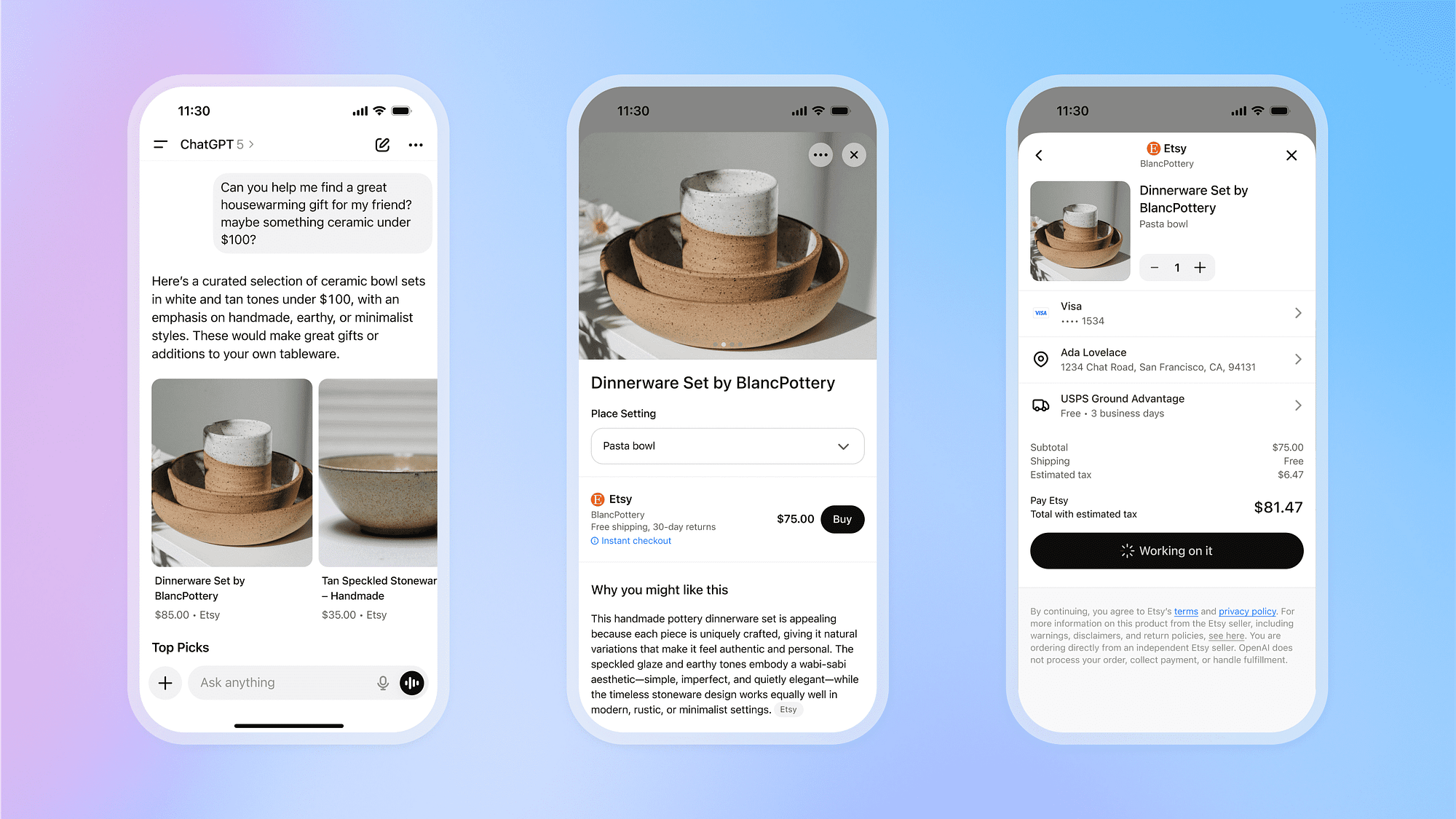 Note: Buying is starting to follow discovery into the AI. OpenAI experimented with instant checkout within ChatGPT, so you could buy from some Etsy and Shopify sellers without leaving the chat. And there are now open standards that let an AI agent buy things on someone’s behalf: the Agentic Commerce Protocol from OpenAI and Stripe, and Google’s Universal Commerce Protocol. You can think of them as a new kind of API, designed for agents instead of websites. --- <!-- .slide: class="figure" --> ## Tickets are harder for an agent to buy <div class="diagram"> <svg xmlns="http://www.w3.org/2000/svg" viewBox="0 0 1152 400" preserveAspectRatio="xMinYMid meet" role="img" aria-label="Buying a bowl is one decision, then buy. Buying two tickets is five: which show, which date, how many, which price and which seats, then buy. The seats are where people care most: together, on the aisle, with a view of the stage"> <defs> <marker id="decide-arrow" viewBox="0 0 10 10" refX="8" refY="5" markerWidth="5" markerHeight="5" orient="auto"> <path class="ink" d="M0,0 L10,5 L0,10 z"/> </marker> </defs> <!-- A bowl: one decision, then straight to buy --> <g> <text class="t-label" x="0" y="26">A bowl</text> <rect class="surface" x="0" y="46" width="152" height="90" rx="10"/> <text class="t-label" x="20" y="84" style="font-size: 26px">Which</text> <text class="t-label" x="20" y="114" style="font-size: 26px">bowl</text> <path class="line" stroke-width="3" marker-end="url(#decide-arrow)" d="M160,91 H992"/> <rect class="surface" x="1000" y="46" width="152" height="90" rx="10"/> <text class="t-label" x="20" y="100" style="font-size: 26px" transform="translate(1000 0)">Buy</text> </g> <!-- Two tickets: five decisions --> <g> <text class="t-label" x="0" y="200">Two tickets</text> <rect class="surface" x="0" y="220" width="152" height="90" rx="10"/> <text class="t-label" x="20" y="258" style="font-size: 26px">Which</text> <text class="t-label" x="20" y="288" style="font-size: 26px">show</text> <rect class="surface" x="200" y="220" width="152" height="90" rx="10"/> <text class="t-label" x="220" y="258" style="font-size: 26px">Which</text> <text class="t-label" x="220" y="288" style="font-size: 26px">date</text> <rect class="surface" x="400" y="220" width="152" height="90" rx="10"/> <text class="t-label" x="420" y="258" style="font-size: 26px">How</text> <text class="t-label" x="420" y="288" style="font-size: 26px">many</text> <rect class="surface" x="600" y="220" width="152" height="90" rx="10"/> <text class="t-label" x="620" y="258" style="font-size: 26px">Which</text> <text class="t-label" x="620" y="288" style="font-size: 26px">price</text> <rect class="surface" x="800" y="220" width="152" height="90" rx="10"/> <text class="t-label" x="820" y="258" style="font-size: 26px">Which</text> <text class="t-label" x="820" y="288" style="font-size: 26px">seats</text> <rect class="surface" x="1000" y="220" width="152" height="90" rx="10"/> <text class="t-label" x="1020" y="274" style="font-size: 26px">Buy</text> <g class="line" stroke-width="3" marker-end="url(#decide-arrow)"> <path d="M160,265 H192"/> <path d="M360,265 H392"/> <path d="M560,265 H592"/> <path d="M760,265 H792"/> <path d="M960,265 H992"/> </g> </g> <!-- The seats: where people care most --> <g class="fragment"> <rect class="fill-spring" x="800" y="220" width="152" height="90" rx="10"/> <text class="t-label" x="820" y="258" style="font-size: 26px; fill: var(--slide-paper)">Which</text> <text class="t-label" x="820" y="288" style="font-size: 26px; fill: var(--slide-paper)">seats</text> <text class="t-body" x="800" y="350">Together, on the aisle,</text> <text class="t-body" x="800" y="378">with a view of the stage</text> </g> </svg> </div> Note: Tickets are of course a much more complicated product than a bowl. You have to choose dates, seats, price levels, whether you’re a member or not. (Click.) The seats are the hard part, and they’re the part a lot of people really care about. So I bet simple cases will go first, like “two good seats for Saturday under a hundred and fifty dollars”. And I’d expect the kind of hybrid you saw in our prototype, where the conversation hands you a seat map when the seats matter, to be around for a while. Tessitura organizations are better placed for this than most, because there’s already a full API underneath every Tessitura website, and every one of those decisions is in it. --- <!-- .slide: class="cols" --> ## So what happens to your website? ### A persuasion engine <!-- .element: class="fragment semi-fade-out" data-fragment-index="1" --> People arrive undecided, and the site convinces them ### A structured offer <!-- .element: class="fragment" data-fragment-index="1" --> People arrive decided, and the site takes the payment Note: Will you need a website in 2036? I think you will, but its job changes. For your median user, it goes from being a persuasion engine, where people arrive undecided and the site convinces them, (click) to a structured offer, where they arrive decided and the site takes the payment. --- <!-- .slide: class="statement" --> ## The AI paraphrases what you publish Your event descriptions, your listings, your reviews Note: That’s the stark version. Your regular audience already arrives from your email with their minds made up. What changes is where the persuading happens for everyone else. More of it will happen inside an AI answer, and the AI will be paraphrasing what you’ve published: your event descriptions, your listings, your reviews. So the persuasion hasn’t gone away. It’s moved into your data and your copy, and those need to be accurate and complete, and clear about what makes a show worth seeing. --- <!-- .slide: class="statement" --> ## SEO was never a trick, and AI search isn’t either Clear structure, well-linked pages and good metadata work for people and machines alike Note: (Short of time? Skip to the last paragraph.) For twenty years people have talked about SEO as if there were a trick to it. There mostly wasn’t. What search engines rewarded was a well-built website: clearly structured, easy for people to find their way around, with the technical details right so a crawler could understand what was there. SEO was always mostly about making a better website, in ways that matter to people too. We’re in the same position again now. --- <!-- .slide: class="figure" --> ## Tell machines what you tell people <div class="diagram"> <svg xmlns="http://www.w3.org/2000/svg" viewBox="0 0 1152 460" preserveAspectRatio="xMinYMid meet" role="img" aria-label="The same event twice. What people see: an event listing for Romeo and Juliet on Saturday 14 November at 7.30pm, tickets from 95 dollars, with a button to book. What an AI reads: the same details as Schema.org markup, a TheaterEvent with its name, start date, price, currency and availability"> <!-- What people see: the event on your website --> <g> <text class="t-label" x="0" y="28">What people see</text> <rect x="0" y="52" width="548" height="400" rx="16" fill="#fff"/> <rect x="24" y="76" width="500" height="132" rx="8" fill="#e6e3de"/> <text class="t-serif" x="24" y="258" style="font-size: 36px; fill: #202124">Romeo & Juliet</text> <text x="24" y="296" style="font-size: 21px; fill: #3c4043">Saturday 14 November, 7.30pm</text> <text x="24" y="326" style="font-size: 21px; fill: #3c4043">Tickets from $95</text> <rect x="24" y="358" width="184" height="54" rx="27" fill="#202124"/> <text x="54" y="392" style="font-size: 20px; font-weight: 600; fill: #fff">Book tickets</text> </g> <!-- What an AI reads: the same event as Schema.org markup --> <g class="fragment" style="font-family: ui-monospace, 'SF Mono', Menlo, monospace; font-size: 19px"> <text class="t-label" x="604" y="28" style="font-family: var(--r-heading-font); font-size: 28px; fill: currentColor">What an AI reads</text> <rect x="604" y="52" width="548" height="400" rx="16" fill="#163620"/> <text x="632" y="98" style="fill: #bed5c3">{</text> <text x="655" y="126" style="fill: #bed5c3">"@context": "https://schema.org",</text> <text x="655" y="154" style="fill: #bed5c3">"@type": "TheaterEvent",</text> <text x="655" y="182" style="fill: #bed5c3">"name": <tspan style="fill: #fff; font-weight: 600">"Romeo & Juliet"</tspan>,</text> <text x="655" y="210" style="fill: #bed5c3">"startDate": <tspan style="fill: #fff; font-weight: 600">"2026-11-14T19:30"</tspan>,</text> <text x="655" y="238" style="fill: #bed5c3">"offers": {</text> <text x="678" y="266" style="fill: #bed5c3">"@type": "Offer",</text> <text x="678" y="294" style="fill: #bed5c3">"price": <tspan style="fill: #fff; font-weight: 600">"95.00"</tspan>,</text> <text x="678" y="322" style="fill: #bed5c3">"priceCurrency": "AUD",</text> <text x="678" y="350" style="fill: #bed5c3">"availability": "InStock"</text> <text x="655" y="378" style="fill: #bed5c3">}</text> <text x="632" y="406" style="fill: #bed5c3">}</text> </g> </svg> </div> Note: In practice, two things matter more than they did a year ago. The first is giving machines the same information you give people. On your event page, a person sees the title, the date and time, and the price. (Click.) Schema.org’s event vocabulary lets you say the same things in a form a machine can read without guessing: dates, prices, performers, venue, and accessibility information too. Some sites now also give agents a plain-text version of each page, and that’s catching on. --- <!-- .slide: class="statement" --> ## If an agent can’t complete a purchase, you’re not on sale to it The CAPTCHAs and queues that stop resellers’ bots can stop your customers’ agents too Note: The second is a clean path from finding to buying. If an agent can read your offer but can’t complete a purchase, then as far as it’s concerned, you’re not on sale. Lots of us have spent years keeping bots out of our checkouts, because of resellers, with CAPTCHAs and queues and similar. Some of the bots arriving now will be your own customers’ agents, and telling the two apart is going to be one of the harder problems of the next few years. (Short of time? Skip this paragraph.) I see well-meaning organizations blocking AI crawlers in their robots.txt file, and I think that’s backwards. robots.txt is a polite request, so the bots you’d most like to stop ignore it, and the ones that respect it include ChatGPT, Claude and Gemini. If someone’s asking ChatGPT what the Sydney Symphony has on next month, the Sydney Symphony should want ChatGPT to have full and easy access to its website. --- <!-- .slide: class="statement" data-theme="spring-dark" --> ## More work will happen without anyone asking Workflows and agents that start on their own Note: The third change is inside your organization. More and more work will happen without anyone asking for it. --- <!-- .slide: class="figure" --> ## From AI that answers to AI that acts <div class="diagram"> <svg xmlns="http://www.w3.org/2000/svg" viewBox="0 0 1104 400" preserveAspectRatio="xMinYMid meet" role="img" aria-label="AI workers are moving from prompted, like chat and sub-agents, to unprompted, like workflows and autonomous agents"> <defs> <marker id="prompted-arrow" viewBox="0 0 10 10" refX="8" refY="5" markerWidth="5" markerHeight="5" orient="auto"> <path class="ink" d="M0,0 L10,5 L0,10 z"/> </marker> </defs> <path class="line" stroke-width="3" marker-end="url(#prompted-arrow)" d="M20,180 H1090"/> <g> <text class="t-label" x="0" y="50">Prompted</text> <text class="t-body" x="0" y="84">You ask, and it answers</text> <circle class="paper" cx="110" cy="180" r="18"/><circle class="line spring" stroke-width="5" cx="110" cy="180" r="16"/> <text class="t-label" x="60" y="252">Chat</text> <text class="t-body" x="60" y="286">ChatGPT, Claude</text> <circle class="paper" cx="370" cy="180" r="18"/><circle class="line spring" stroke-width="5" cx="370" cy="180" r="16"/> <text class="t-label" x="320" y="252">Sub-agents</text> <text class="t-body" x="320" y="286">Cowork, Claude Code</text> </g> <g class="fragment"> <path class="line" stroke-width="2" stroke-dasharray="4 8" d="M560,20 V340"/> <text class="t-label" x="600" y="50">Unprompted</text> <text class="t-body" x="600" y="84">Something happens, and it acts</text> <circle class="fill-spring" cx="690" cy="180" r="18"/> <text class="t-label" x="640" y="252">Workflows</text> <text class="t-body" x="640" y="286">n8n, Make</text> <circle class="fill-spring" cx="950" cy="180" r="18"/> <text class="t-label" x="900" y="252">Autonomous</text> <text class="t-label" x="900" y="286">agents</text> <text class="t-body" x="900" y="320">OpenClaw</text> </g> </svg> </div> Note: Most of what I’ve talked about so far is prompted AI: you ask, and it answers. (Click.) The shift is towards AI that acts when something happens. When I ask an agent to keep an eye on a support ticket, I ask once. After that it’s checking on its own. Workflows are the tamer kind: fixed steps with some AI inside, set off by an email or a ticket sale. Autonomous agents work out their own steps. That makes one less like a tool and more like an extra member of staff, which is exciting, and exactly why I’d be careful about what it has access to. --- <!-- .slide: class="statement" --> <div class="email"> <p><strong>Margaret Chen</strong> to the box office</p> <p class="message">Can I swap my Saturday tickets for the Sunday matinee?</p> </div> Note: Here’s what that could look like in a box office. Margaret Chen is back, and she wants to exchange her tickets. --- <!-- .slide: class="figure" --> ## One email, four steps <div class="diagram"> <svg xmlns="http://www.w3.org/2000/svg" viewBox="0 0 1104 440" preserveAspectRatio="xMinYMid meet" role="img" aria-label="One email in four steps: an agent reads it, another looks up the order and drafts a reply, a third checks the work, and a person approves, edits or rejects it"> <defs> <marker id="workflow-arrow" viewBox="0 0 10 10" refX="8" refY="5" markerWidth="5" markerHeight="5" orient="auto"> <path class="ink" d="M0,0 L10,5 L0,10 z"/> </marker> </defs> <g> <rect class="surface" x="0" y="20" width="246" height="300" rx="10"/> <text class="t-label" x="24" y="72">An agent</text> <text class="t-label" x="24" y="106">reads it</text> <text class="t-body" x="24" y="160">What kind of</text> <text class="t-body" x="24" y="190">request is it,</text> <text class="t-body" x="24" y="220">and how urgent?</text> </g> <g class="fragment"> <path class="line" stroke-width="3" marker-end="url(#workflow-arrow)" d="M252,170 H280"/> <rect class="surface" x="286" y="20" width="246" height="300" rx="10"/> <text class="t-label" x="310" y="72">Another</text> <text class="t-label" x="310" y="106">drafts a reply</text> <text class="t-body" x="310" y="160">Looks up the order,</text> <text class="t-body" x="310" y="190">the exchange policy</text> <text class="t-body" x="310" y="220">and Sunday’s seats</text> </g> <g class="fragment"> <path class="line" stroke-width="3" marker-end="url(#workflow-arrow)" d="M538,170 H566"/> <rect class="surface" x="572" y="20" width="246" height="300" rx="10"/> <text class="t-label" x="596" y="72">A third</text> <text class="t-label" x="596" y="106">checks the work</text> <text class="t-body" x="596" y="160">Is the reply right,</text> <text class="t-body" x="596" y="190">and are those the</text> <text class="t-body" x="596" y="220">best seats?</text> </g> <g class="fragment"> <path class="line" stroke-width="3" marker-end="url(#workflow-arrow)" d="M824,170 H852"/> <rect class="line spring" stroke-width="5" x="860" y="22" width="242" height="296" rx="10"/> <text class="t-label" x="884" y="72">A person</text> <text class="t-label" x="884" y="106">decides</text> <text class="t-body" x="884" y="160">Approve, edit</text> <text class="t-body" x="884" y="190">or reject</text> </g> <g class="fragment"> <text class="t-label" x="0" y="400">The exchange goes through, and the patron gets their reply.</text> </g> </svg> </div> Note: One agent reads it and works out what she’s asking. (Click.) Another looks up the order, your exchange policy and Sunday’s seats, and drafts a reply. (Click.) A third checks the work. (Click.) Then a person on your team decides, (click) and the exchange goes through. Within a few years, I think a lot of your patron services team’s time will go on supervising work like this, and less on doing every step by hand. I worry about what this does to jobs, and this is where that gets real. I don’t have a tidy answer. But for anything involving a patron’s money or data, I’d keep a person in that review step for a long time. --- <!-- .slide: class="divider" data-theme="dark" data-act --> ## Where to start Note: So that’s what I think is coming: more of the specialist work done in-house, more of your audience arriving through an AI, and more work happening without anyone asking. What would I actually do about it, whatever your size and budget? --- <!-- .slide: class="statement" data-theme="dark" --> ## First, give it an owner At executive level, with someone to lead the work Note: First, give it an owner. A lot of organizations never really settled where digital sits, and AI will reach much further than digital did: marketing, the box office, development, IT and finance all have a stake in it. Someone at executive level needs to own it, to get the most out of it and to manage the risks. And they’ll need someone to lead the work day to day, who knows how the place actually runs. It’s the same reason Tessitura has an owner. Most of you already work across those departments. You know where the data lives and what state it’s in, and how processes really run, which isn’t always how they’re written down. That’s a lot of what an AI lead needs. If your organization is one of the seventy-nine percent without one, maybe it should be someone in this room. --- <!-- .slide: class="statement" data-theme="dark" --> ## Second, think like a machine Ask an AI what’s on at your venue next weekend. Note: Second, start thinking like a machine. Check how consistently your performance information is set up in Tessitura and on your website: run times, age guidance, relaxed and Auslan-interpreted performances, all entered the same way every time. Then ask ChatGPT, Gemini and Claude what’s on at your venue next weekend, and whether there’s an Auslan-interpreted performance of anything in your city next month, and see where the answers send people. It takes ten minutes, and I’d be surprised if it didn’t turn up something you want to fix. --- <!-- .slide: class="statement" data-theme="dark" --> ## Third, map the benefits With a person’s name next to each one Note: Third, map the benefits. This is where Baumol comes back in: the savings are in the work around the performance. List the jobs your staff’s time really is spent on, like exchange emails, donor acknowledgments and the monthly board report, estimate what you’d save or earn if each got faster, and put a person’s name next to each one. --- <!-- .slide: class="statement" data-theme="dark" --> ## Fourth, share what’s already working Turn individual wins into tools the whole team uses. Note: Fourth, find your quick wins among the people who are already using AI well on their own. There’s someone like that in every organization. Turn what they’re doing into something the whole team can use, like a shared set of instructions or a documented workflow. That’s how an individual gain becomes an organizational one, and it’s the way out of everyone having their own tool, their own prompts and their own version of the truth. --- <!-- .slide: class="statement" --> ## Four things to start on tomorrow - Give it an owner - Think like a machine - Map the benefits - Share what’s already working Note: (Pause here long enough for people to take a photo. There’s nothing to say; let them.) --- <!-- .slide: class="photo" data-theme="slate" data-act="none" data-background-image="/_astro/ford-1924-slate.CCgGnibn.jpg" data-background-size="cover" --> ## It took forty years to redesign the factory. I don’t think we’ll get forty years this time. Note: It took about forty years to get from the first electric motors in factories to factories designed around them, and the gains came with the redesign. I don’t think we’ll get forty years this time. Last time, the redesign meant new buildings and new machines, and a lot of factory owners waited for the old ones to wear out first. This time, most of what’s being rearranged is how information and decisions move around your organization, and that can change much faster. And the companies putting themselves between you and your audiences aren’t going to wait for us. --- <!-- .slide: class="divider half" data-theme="rose-dark" data-background-image="/_astro/mahler-1907-rose-dark.DYuWT2rM.jpg" data-background-size="contain" data-background-position="right center" --> ## The orchestra of 2036 still plays the same Mahler The organization around it will look very different. Note: I think the arts organization of 2036 still puts the same art on the same stages, and I’d be sceptical of anyone who tells you AI changes that. Mahler’s Fifth will still need its seventy minutes and its full orchestra. But the organization around it will look very different. I think it’ll need fewer people for the repetitive parts of administration, and the people it has will spend more of their time on the parts that need a person: the patron who’s upset, the donor who’s wavering, the season that needs explaining. And if you do the work, the cost of everything around the performance won’t be rising quite as fast as it has for the last sixty years. So, what can AI do for us? I think it can take some of the pressure off everything around the performance, but only if we reorganize the work around it, and that part is up to us. I don’t think that’s an existential question for arts organizations. It’s an operational one, and operations is what most of the people in this room do. So you can start on it tomorrow. --- <!-- .slide: class="divider" data-theme="dark" --> ## Thank you andrew.shuttleworth@made.media Note: Thank you. At Made we do a lot of digital strategy work with arts organizations on exactly these questions: which platforms to invest in, where to start, and in what order. I’d be very happy to talk to anyone about their own organization, so please come and find me afterwards. (Move to the next slide for questions.) --- <!-- .slide: class="grid" --> ## Where are you least ready? ### Technology Are your systems and data ready for AI to use? ### People Who’s responsible, and do they have the skills? ### Processes Are they written down, and is your governance ready? ### Investment How will you measure the return, and what’s the budget? <p class="source">andrew.shuttleworth@made.media</p> Note: (Leave this up during questions.) If the room is slow to start, go back to where you began: a show of hands. Which of these four do you feel least ready on? Then ask someone from the biggest group what’s getting in the way.
made
.